
How Often Should You Repaint Your House? A Central Oregon Climate Guide
Central Oregon's high-desert sun and freeze-thaw winters wear paint faster than most of the country. Here's how often to repaint your home in Bend — and how to stretch every coat.
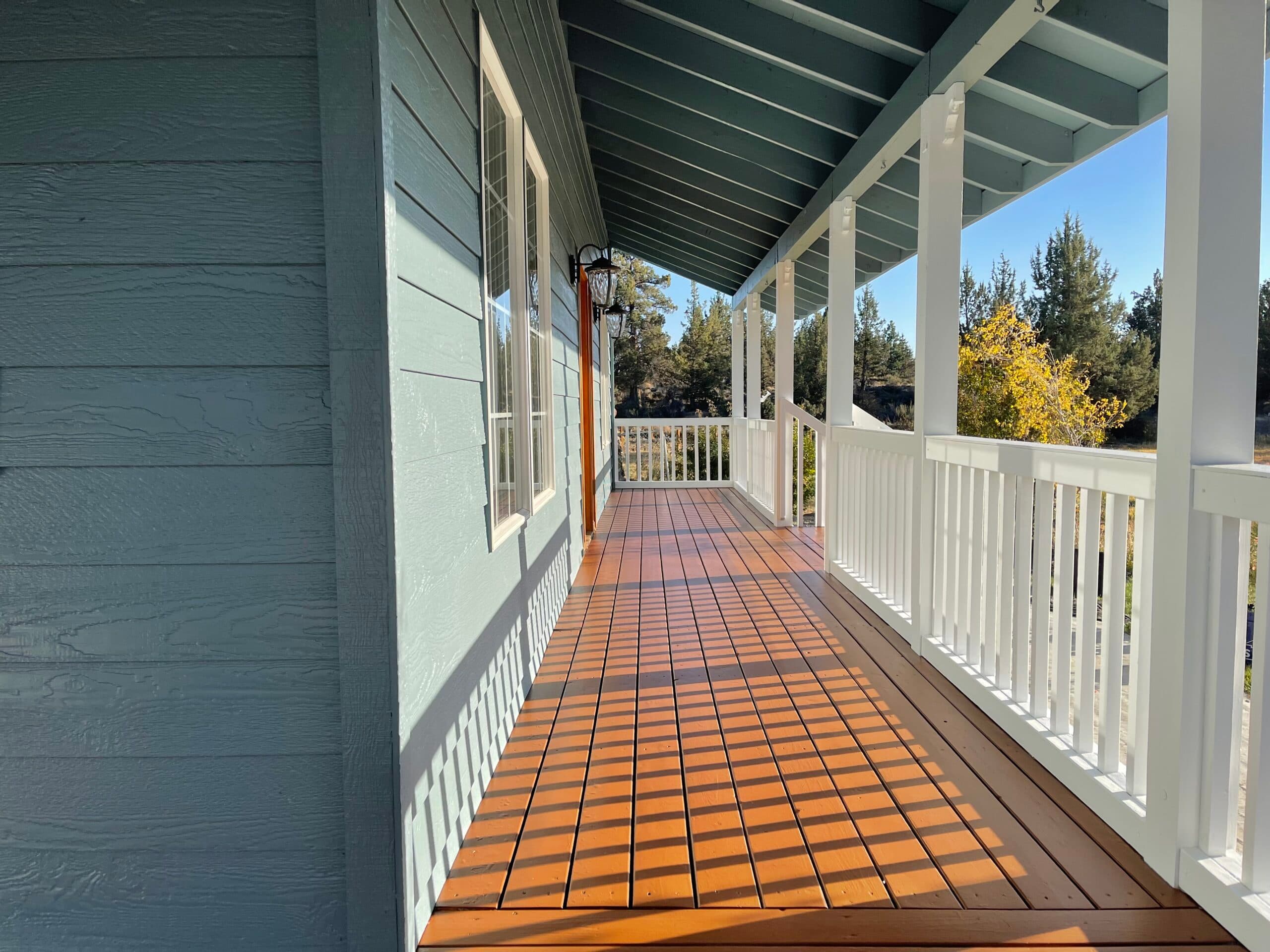
If you own a home in Bend, Redmond, or anywhere across Central Oregon, the paint on your siding is working harder than it would almost anywhere else in the country. Our high-desert sun, thin air at elevation, and brutal freeze-thaw winters age a finish faster than the mild, humid climates most national repainting advice is written for. So the honest answer to “how often should you repaint your house?” is: probably a little sooner than you think.
Below is a realistic, Central-Oregon-specific timeline for exterior and interior repainting — what drives it, how to read the warning signs, and how to squeeze extra years out of every coat.
The short answer
For a professionally prepped and painted home in the Bend area, plan on repainting roughly:
- Exterior siding — every 7 to 10 years. Quality prep and premium coatings hit the top of that range; wood and heavily sun-exposed walls land at the bottom.
- Trim, fascia, and railings — every 4 to 7 years. These edges take the most direct weather and fail first.
- Decks and fences (stain) — every 2 to 3 years. Horizontal wood in the high desert weathers fast.
- Interior walls — every 5 to 7 years,or every 3 to 4 in high-traffic rooms, hallways, and kids' spaces.
Those are starting points, not guarantees. Two identical houses on the same street can be years apart depending on sun exposure, the last crew's prep, and the paint that went on. Here's why Central Oregon is tougher than average.
Why Central Oregon's climate puts paint on a shorter clock
Paint doesn't usually fail because it “wears out.” It fails because the environment breaks down the binder that holds the pigment to your siding. Four things about our high desert accelerate that:
- Intense, high-elevation UV.Bend sits above 3,600 feet. There's less atmosphere overhead to filter ultraviolet light, and we get a lot of sun. UV is the number-one enemy of an exterior finish — it chalks, fades, and embrittles paint from the day it cures.
- Freeze-thaw cycling. Our winters swing above and below freezing again and again. Any moisture that gets behind a finish expands as it freezes and contracts as it thaws, prying paint loose and opening cracks.
- Big daily temperature swings. A 40-degree difference between a sunny afternoon and a cold high-desert night is normal here. Siding expands and contracts constantly, and the paint film has to flex with it or crack.
- Bone-dry air. Low humidity is easy on mildew but hard on wood and caulk — both dry out, shrink, and check, which stresses the coating on top of them.
None of this means paint is a bad investment here — it means prep and productmatter more in Central Oregon than they do in Portland or the valley. It's exactly why our exterior painting process leans so heavily on washing, sanding, priming, and caulking before a drop of color goes on.
How long exterior paint lasts by surface
“Exterior paint” isn't one lifespan — it depends heavily on what you're coating and where it faces. Here's a realistic guide for homes in the Bend area, assuming professional prep and quality coatings:
| Surface | Typical Central Oregon lifespan | Notes |
|---|---|---|
| Fiber-cement siding (Hardie) | 10–15 years | Most stable; holds paint longest. |
| Stucco | 7–10 years | Great until it cracks — repair hairlines early. |
| Engineered wood (LP SmartSide) | 7–10 years | Durable when edges stay sealed. |
| Natural wood / lap siding | 5–8 years | Moves the most; south and west walls fade first. |
| Trim, fascia & soffits | 4–7 years | Most exposed edges — usually the first repaint. |
| Doors & shutters | 4–6 years | Direct sun and daily use wear them quickly. |
| Decks & fences (stain) | 2–3 years | Horizontal, walked-on wood weathers fastest. |
Notice the pattern: the flatter a surface lies to the sky and the more sun it catches, the sooner it needs attention. South- and west-facing walls in Bend routinely need a refresh a year or two before the shaded north side of the same house.
Signs it's time to repaint
Rather than counting years, walk your home's exterior once a year — late spring is ideal — and look for these tells:
- Chalking. Rub a dark rag on the siding. A heavy powder means the binder is breaking down under UV.
- Fading. Compare a sun-baked wall to a sheltered spot under the eaves. A big color gap means the finish is spent.
- Cracking, flaking, or peeling. Any lifting film is an open door for water — and in freeze-thaw country that damage spreads fast.
- Failed caulk. Gaps at trim, corners, and window joints let moisture in behind the paint.
- Bare or gray wood. Exposed wood is weathering with no protection and needs to be sealed sooner rather than later.
- You just don't love it.Curb appeal counts too — especially if you're selling.
A good rule for the high desert: if you're seeing chalk and fade on the sunny side, you're already at the point where repainting now protects the siding — waiting another two years usually means more repair work later.
How to make your paint last longer in the high desert
The difference between a seven-year paint job and an eleven-year one isn't luck. It comes down to four things:
- Obsessive prep. Power washing, scraping, sanding, priming bare spots, and re-caulking every joint is what actually makes a finish last. Paint over dirt or chalk and it will peel no matter how premium it is.
- The right product. High-quality 100% acrylic coatings flex with our temperature swings and carry UV-resistant pigments built for exactly this kind of exposure.
- Paint in the right window. Applying in the correct temperature and dryness lets the film cure properly and bond for the long haul. (More on that in our guide to the best time of year to paint a house in Central Oregon.)
- Simple maintenance. A gentle wash once a year to knock off dust, pollen, and mildew, plus spot-caulking as needed, buys real time between full repaints.
What about interior paint?
Indoors, you're not fighting UV and freeze-thaw, so timelines are longer and driven by wear instead:
- Living rooms and bedrooms: every 5 to 7 years.
- Hallways, kitchens, kids' rooms, and bathrooms: every 3 to 4 years — scuffs, moisture, and cleaning take a toll.
- Ceilings:every 10 years or so, unless there's water staining.
- Trim and doors: as needed — they chip and yellow before walls do.
The bottom line for Bend homeowners
Budget for an exterior repaint every 7 to 10 years, keep an eye on trim and sun-facing walls in between, and re-stain decks every couple of years. When it's time, prep is everything — that's the whole game in the high desert. We paint homes throughout Bend and Deschutes County and would be glad to take a look at yours. A quick walkthrough tells you exactly where your finish stands and whether this is the year to repaint.
Want a straight answer for your specific home? Request a free estimateand we'll assess your siding, trim, and exposure in person.
/ Questions
Frequently asked questions.
- How long does exterior paint last in Bend, Oregon?
- With thorough prep and premium coatings, a professional exterior paint job in the Bend area typically lasts 7–10 years. Trim, fascia, and south- or west-facing walls take the most sun and often need attention a few years sooner than shaded sides.
- How often should you repaint a house exterior?
- In Central Oregon, plan on repainting your exterior every 7–10 years. Natural wood siding and heavily sun-exposed walls trend toward the shorter end, while fiber-cement siding can hold paint 10–15 years with proper maintenance.
- How do I know if my house needs repainting?
- Look for chalking (powder on the siding), noticeable fading on sunny walls, any cracking, flaking, or peeling, gaps where caulk has failed, and exposed bare wood. Any of these means it's time to repaint before moisture causes deeper damage.
- Does Central Oregon's climate really wear paint faster?
- Yes. High-elevation UV, repeated winter freeze-thaw cycles, large day-to-night temperature swings, and very dry air all break down exterior finishes faster than milder, more humid climates — which is why prep and premium, UV-resistant coatings matter so much here.
Keep reading.
All articlesHow Much Does It Cost to Paint a House in Bend, Oregon? (2026 Guide)
Real 2026 price ranges for painting a house in Bend — interior, exterior, cabinets, and decks — plus the factors that move the quote and how to get an accurate number.
Best Time of Year to Paint a House in Central Oregon
Central Oregon's exterior painting season is short. Here's the best time of year to paint your house, a month-by-month guide, and why booking early matters.
Ready when you are
Get a free estimate.
Free, no-obligation estimates and walkthroughs with Oregon Empire Painting. We'll assess your project, talk colors and finishes, and give you a transparent quote.